
Merch with Memory: Design Products that Evolve with Every Owner
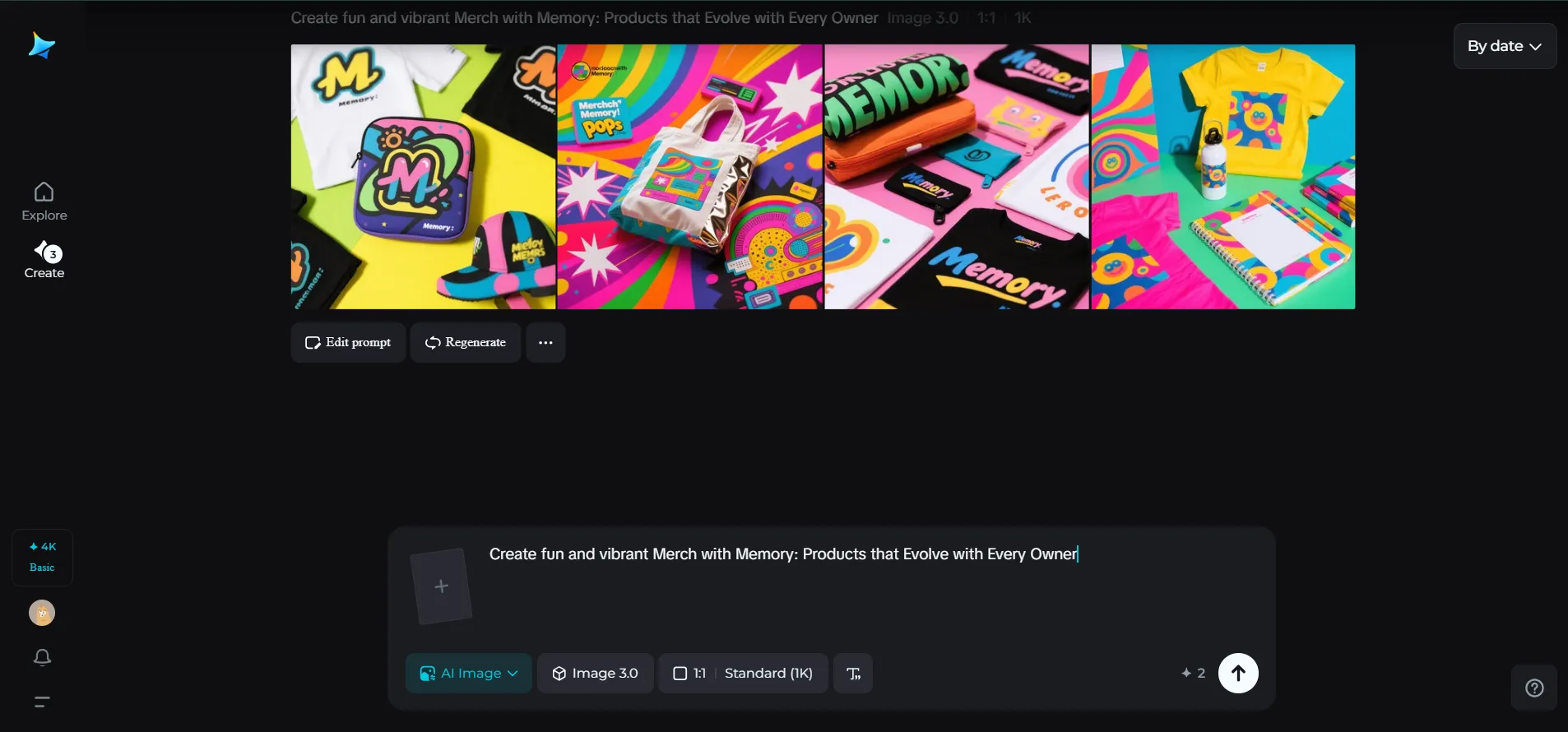
Picture a sneaker that changes color as you walk through a new city, or a tote bag that shows you the cities you’ve been to, covered in soft, digital brushstrokes. Welcome to the age of merch with memory — where ordinary products are no longer inanimate objects, but living, breathing canvases that transform with their owners.
Here in this bizarre and magical new world, brand merchandise is not just possessed — it remembers. Every piece collects impressions of experience, emotion, and setting, accumulating an individual journey that reflects the wearer’s life. From reactive color fabrics to AR-registered accessories, each item has a tale that deepens over time. And with Dreamina’s AI photo generator, designers are able to previsualize these responsive ideas before they can be made — watch how each piece could change in the light, in movement, or in mood.
This new generation of storytelling merch transforms things into mementos, and mementos into histories. Let’s delve into how memory intersects with design in this new world.
Evolving merchandise: from product to personal companion
Classic merch has long been concerned with representation — a logo, a slogan, a mascot that indicates membership. But adaptive merch reorients the attention away from what a product communicates about the brand and toward what it discovers about you.
Imagine a brand that produces limited-series jackets that change color, move, or re-tape in response to sunlight exposure or the environment. Each of them looks different after half a year of use — customized by nature itself. Or consider a concert shirt that reveals AR visuals from every live show you go see, superimposing animations that beat like the songs you heard live.
These things become companions, not commodities — they develop just like humans do. They shift color, texture, or even imbedded information, creating a timeline of use and memory that can’t be duplicated.
How brands are designing for emotion and evolution
The genius of this movement is that it’s unpredictable — brands no longer control the end look. They create the architecture of change.
Some of the most compelling concepts are:
- Adaptive prints: T-shirts or shoes that change color in response to temperature or UV light, visually documenting the owner’s daily life.
- AR-connected merchandise: Backpacks, caps, or hoodies that reveal virtual worlds when scanned, evolving over time with every touch.
- Memory-embedded accessories: Wristbands or keychains that gather small digital memories — photographs, voice clips, or sketches — from their owners.
With each use, emotional resonance is increased. The object is precious not because it’s limited, but because it’s yours.
The emergence of living archives
Adaptive merch is really wearable narrative — a means to make time visible. And that shifts the dynamic between brand and user.
Companies are not just peddling a single product these days. They are offering something that keeps changing, you know, like an experience that builds up over time. Think about that tote bag. It used to haul groceries around, nothing fancy. Now it is basically a display full of digital stickers from every city you have visited. And the water bottle. That sleek minimal one from before. It holds these subtle AR traces of your hiking trips now.
This is where Dreamina’s AI poster generator steps in — enabling designers to see this transformation as layered, time-based images. They can model how a shirt design changes as it moves through dozens of wearers, how a campaign’s look would adapt in everyday application, or how group memories could blend into a common brand piece of art.
Marketing is no longer just outreach — it is shared authorship.
Developing dynamic merch concepts with Dreamina
Designing responsive merchandise takes imagination — and Dreamina provides the ideal playground to let loose that creativity.
This allows you to create a visual prototype with the feeling of life, movement, and personality, providing depth to ideations that exist in a spectrum between the physical and virtual world.
Step 1: Write a descriptive text prompt
Head over to Dreamina to start your design with an accurate prompt. Share the kind of products, the transformation, and the feeling you want to impart.
For example, a color-changing cool sneaker that shifts from deep blue to amber as it passes through sunlight, with faint glowing lines that plot footsteps and memories.
The more detailed your description, the closer a visualization you will receive — Dreamina has the capability of taking sensory concepts such as texture, motion, and lighting to provide realistic, powerful visuals.
Step 2: Edit parameters and generate
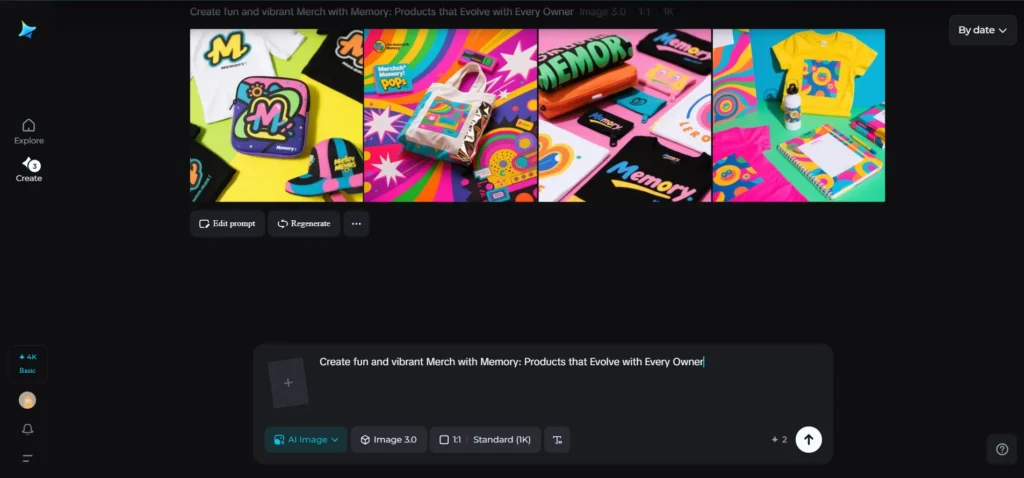
Then choose the model, aspect ratio, and image size that will best represent your thought. Change your resolution to 1K or 2K for the best visual depth. When your parameters have been defined, click on Dreamina’s icon to generate the image and see your adaptive design concept realized – colorful, responsive, and ready to adapt before you.
Step 3: Personalize and download
Once generated, refine your idea even more with Dreamina’s design tools. Inpaint out missing items, widen the frame for more context, eliminate clutter, or retouch color transitions to catch environmental changes. Now that your artwork appears finished, hit the Download icon to export — your developing merch concept is ready to be shared, pitched, or sparked into a campaign.
When objects tell stories back
What makes this design so poetic is that it dissolves the distinction between participation and possession. In a way, the owner becomes co-creator — infusing life into an object which listens, learns, and metamorphoses.
Brands are learning that people want this emotional transaction. Humans no longer desire pristine, untouched goods. They desire objects that age well, that bear evidence of use, that express their energy and movement in subtle textures. Scuff, fade, digital glitch — these are now prized signifiers of identity.
And this is where design intersects with intimacy — not in how something initially appears, but in how it remembers you.
Designing for shared evolution
As the idea grows, we can begin to envision brands treating adaptive merch as living communities. Each product — a jacket, a mug, a smartwatch face — could connect back to a common network, creating a pool of digital mosaic of all owners’ experiences.
So, think about tools like Dreamina’s AI logo generator. They come in handy for whipping up these living brand symbols. Logos that tweak themselves a little on different merch stuff. Adapting to your surroundings or even how you’re feeling inside. The logo ends up woven right into the story’s heart. Pulsing along with the crowd that’s taking it in.
That kind of link pulls brands in closer to folks using them. It spins up this ongoing loop with creativity, emotions, and that sense of who you are. And over time, it just gets tighter, you know.
Conclusion: the memory inside the material
The concept of merch with memory rewrites our conception of branding, ownership, and creativity. It makes each product a private book of stories — one which refreshes not with notifications, but with moments.
Through Dreamina, designers can imagine and develop these living objects prior to production, testing out textures, change, and affective stimuli that animate memory into matter. With its AI-powered design tools, what starts as a spark of imagination can flower into a complete sensory experience — an object that remembers, responds, and resonates.
Because the future of goods is not fixed, it’s emotional. It’s resilient. And above all, it’s living — bearing imprints of each hand, each journey, each tale that comes into contact with it.