
The Parasocial Trap: Why Some Fans Think They ‘Own’ Their Idols
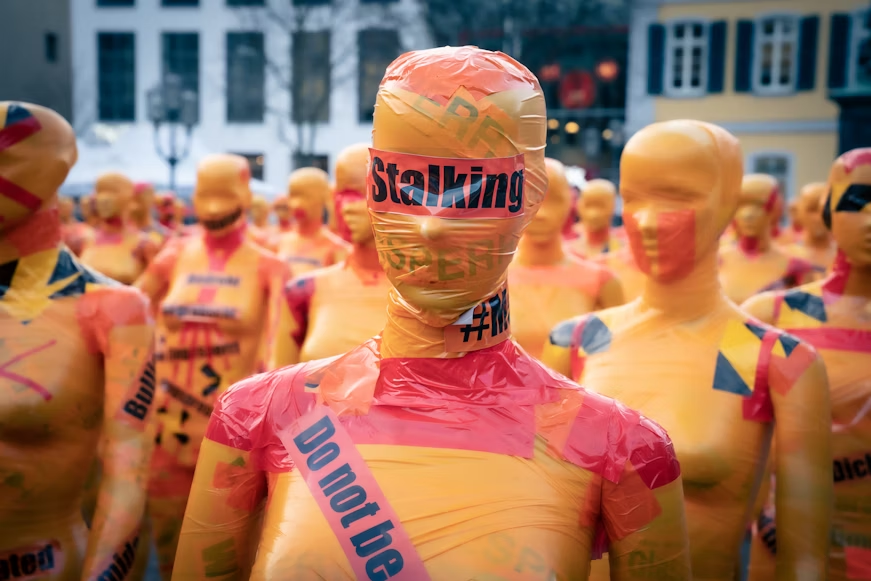
Imagine living your life in constant fear. Everyone is a suspect. You don’t feel safe. Some might say that’s the price of fame. Others will argue there’s nothing normal about celebritydom.
Last year, K-pop artists spoke out against stalker threats and their invasion of privacy. It came after a woman in her 30s was arrested for allegedly stalking rapper Beenzino.
Police reports say that the suspect repeatedly visited Beenzino’s home in Seongbuk District and his clothing brand IAB Studio’s office.
Lee Jun-ho, a member of the K-pop boy band 2PM, shared a similar story of a late-night incident involving someone knocking on his door at 3 am. Other celebrities claim they’re grappling with similar harassment cases.
As fans, we relish the moments we get to see our idols in real life, but when obsession turns invasive, it’s more than awkward. It’s unlawful.
When Affection Becomes Ownership
Celebrities share their lives through livestreams, fan meetings, and reality shows. They post selfies at 2 a.m. and refer to fans as “family.”
It feels personal. Real. Intimate. It’s not.
The Guardian reports that social media has blurred every boundary between public and private life. Fame no longer feels distant but tangible.
That illusion fuels the parasocial relationship, a one-sided bond where fans believe they truly “know” their idols.
Psychologists warn that these imagined connections can spiral into fixation. A study published in PsyPost found that extreme celebrity admiration can overlap with stalking behaviors. When fans start to believe their love gives them rights over time, attention, or privacy, the danger begins.
Real People. Real Consequences.
What happens when the tables are turned? Celebrities aren’t angels. They, too, are capable of committing crimes.
Several years ago, two women filed a personal injury lawsuit against basketball star LeBron James, claiming he was liable for a car accident that resulted in injuries.
Legal support for car accident victims is often not accessible, particularly when you’re up against those who have money and influence on their side.
Arkansas has been grappling with this very issue. The state’s traffic fatalities had risen by 30% over the past 10 years, making the need for strong representation urgent. Little Rock, in particular, is the 10th deadliest city when it comes to pedestrian fatalities.
Enlisting a Little Rock personal injury lawyer requires research by victims. The aftermath involves dealing with medical expenses, lost wages, and changes to your daily life.
Keith Law Group explains that an experienced personal injury attorney plays a critical role in helping injury victims secure justice and fair compensation for the harm they have endured. Celebrity or not, everybody gets their day in court.
The Sasaeng Problem
In South Korea, the dark side of fandom has a name: sasaeng culture.
These aren’t ordinary fans. They track flight numbers. Install GPS devices. Camp outside dorms. Follow vans through traffic.
Sasaengs have escalated their behavior in recent years, with some using drones and hacking tools to spy on idols. What starts as devotion quickly becomes harassment, and these stars live in fear.
Global stars aren’t safe either. The South China Morning Post listed horrifying incidents involving Taylor Swift and Harry Styles, who’ve both faced stalkers breaking into their homes.
Breaking the Law
There’s a point where “loving your fav” becomes breaking the law.
The Conversation explains that once fan behavior causes fear or distress, it becomes harassment. And harassment can carry real consequences: restraining orders, lawsuits, and criminal charges.
South Korean lawmakers have pushed for stricter laws against stalking and privacy invasion after multiple high-profile incidents involving celebrities. The issue persists because fandom defines itself as an identity.
When that identity feels threatened, some fans lash out.
The Psychology of Possession
Why do some fans go too far?
A few years ago, the BBC unpacked the difference between a superfan and a stalker. The article explored in-depth how intense fan behavior stems from loneliness, insecurity, or a desire to belong.
Idols become emotional anchors, a symbol of comfort or hope.
When they become the center of someone’s emotional universe, reality fractures. Fans begin to feel owed. They expect replies, attention, and acknowledgment.
And when they don’t get it, admiration curdles into resentment.
Feeding the Obsession
Fandoms themselves can make things worse.
Online communities reward obsession. The more you post, the more you “prove” your love. The more merch you buy, the higher your status. The deeper your obsession, the louder your praise.
This culture also creates pressure to outdo, out-love, and out-stan everyone else. In that spiral, boundaries become blurry. Constant digital proximity feeds a sense of ownership. The algorithm rewards intensity, not restraint. Fans mistake engagement for intimacy.
And that’s where trouble begins.